2026's Top 5 AI Money Apps Tested & Ranked: Which Ones Actually Find Your Hidden Financial Leaks
By Dana Whitfield, Personal Finance App Tester (30-Day Hands-On Reviews)
Updated August 2026

Are You Tired Of Budgeting Apps That Just Show You Pretty Charts... And Never Actually Find You Any Money?
If you've downloaded a budgeting app before, you know the routine.
You link your accounts. You get a colorful pie chart. It tells you that you spent a lot on "food and drink" last month.
You already knew that. What you didn't know is where the other $200 went.
Financial literacy in the U.S. just hit a 10-year low, and the average person loses $1,819 a year to charges they never notice. Most budgeting apps were never built to find that money. They were built to show you where it already went.
What if an app actually went looking for it?
That's why I spent the last 30 days testing 9 of the most talked-about AI-powered money apps and budgeting tools on the market right now. I wanted to find out which ones actually detect hidden waste and build a plan around it, and which ones are just a prettier spreadsheet.
Here's how I evaluated them:
1. Does It Actually Find Hidden Money (Not Just Track It): Does the tool proactively scan for forgotten subscriptions, fee creep, and price hikes, or does it just categorize what you manually enter?
2. Ease Of Use For Complete Beginners: Can someone with zero finance background set this up in an afternoon, or does it assume you already know what an index fund is?
3. Trustworthiness And Data Security: Is the process transparent about what it does with your data, and does it explain its recommendations in plain language instead of a black box?
Key Ingredients For Maximum Results With An AI Money App
Automatic Blind Spot Detection
The best tools scan your actual transaction history and flag what a busy person would never catch on their own — the $12 subscription from 8 months ago, the "free trial" that quietly started billing.
Like a smoke detector versus a fire extinguisher, this catches the problem before it becomes one.
A System, Not A Chart
A budget that requires you to log in daily and categorize every purchase collapses within a few weeks for almost everyone. The tools that stick are the ones that run on autopilot once you set them up.
It's the difference between a tailored suit and something off the rack — one fits your actual life, the other requires you to adjust around it.
Built to Grow With You
A good money system doesn't stop at budgeting. It should hand you a clear next step into investing and income, so the same $50 you find in an audit can start compounding somewhere.
Like planting a seed instead of just raking leaves, the goal isn't a tidier yard — it's something that keeps growing after you walk away.
Full Automation
The best systems connect the dots: money gets found, then saved, then invested, without you touching it every week.
Think of it as a assistant who never sleeps and never forgets to move the money on payday.
Other Valuable Features To Look For
Direct Support Access
A tool that leaves you guessing when something doesn't make sense isn't finished. Look for clear guidance or support you can actually reach.
Community Access (Optional)
Not essential, but a place to see how other beginners are using the system can keep you accountable.
Lifetime Updates
Financial tools and platforms change constantly. Look for resources that get updated instead of going stale.
Watch Out For These Red Flags
Overhyped Promises
Be wary of anything promising "guaranteed" investment returns or overnight riches. Real financial progress is steady, not instant.
No Explained Mechanism
If a tool can't explain how it finds savings or builds your plan, you're trusting a black box with your money.
Hidden Recurring Costs
Some "free" finance apps quietly upsell premium tiers to unlock the features that actually matter. Know the real price before you start.
Top 5 AI Money Apps of 2026:
Tested and Ranked
#1 The AI Personal Finance and Wealth Builder 🏆




Overall Rating: A+
Pros:
Finds $100 to $300 a month in hidden leaks with a single 30-minute audit
Six-module system covers auditing, budgeting, investing, debt payoff, and automation in one place — not five separate apps
Written for complete beginners, no finance background or spreadsheet needed
Runs on free AI tools you likely already have (ChatGPT, Claude, or Gemini) — no extra software subscription
Every step includes a copy-and-paste AI prompt, so you're never guessing what to type
Replaces daily budget-tracking with an automated three-category system
Rated 4.7/5 by over 11,000 students
One-time $27 payment, not a recurring subscription, backed by a 30-day money-back guarantee
Cons:
Only available through the official site, not listed on app stores or third-party platforms
Requires a few focused hours in month one to set the system up before it runs itself
Why The AI Personal Finance and Wealth Builder Stands Out as #1
Every other tool on this list tracks your money after the fact. This is the only one that starts by hunting down what you're actively losing — then hands you a system for what to do with it.
It's structured in six modules that build on each other: find the leaks, build a budget that runs itself, start investing with $50, build an income stream, get a real debt payoff date, then automate the whole thing. Nothing else on this list goes past step one.
What's Inside
The 45-page guide is broken into a clear sequence:
The AI Money Audit: A 30-minute walkthrough that finds forgotten subscriptions, quiet fee creep, and price increases most people never catch on their own.
The Automated Budget: Three categories and automatic transfers replace daily tracking entirely.
The Investment Starter Kit: Gets a first $50 investment moving the same week, explained in plain language.
The Income Stream Builder: Five AI-assisted paths to extra income, mapped step by step.
The Debt Destruction Framework: Turns existing debt into a month-by-month plan with an actual payoff date.
The Automation Playbook: Connects everything so it runs monthly without daily input.
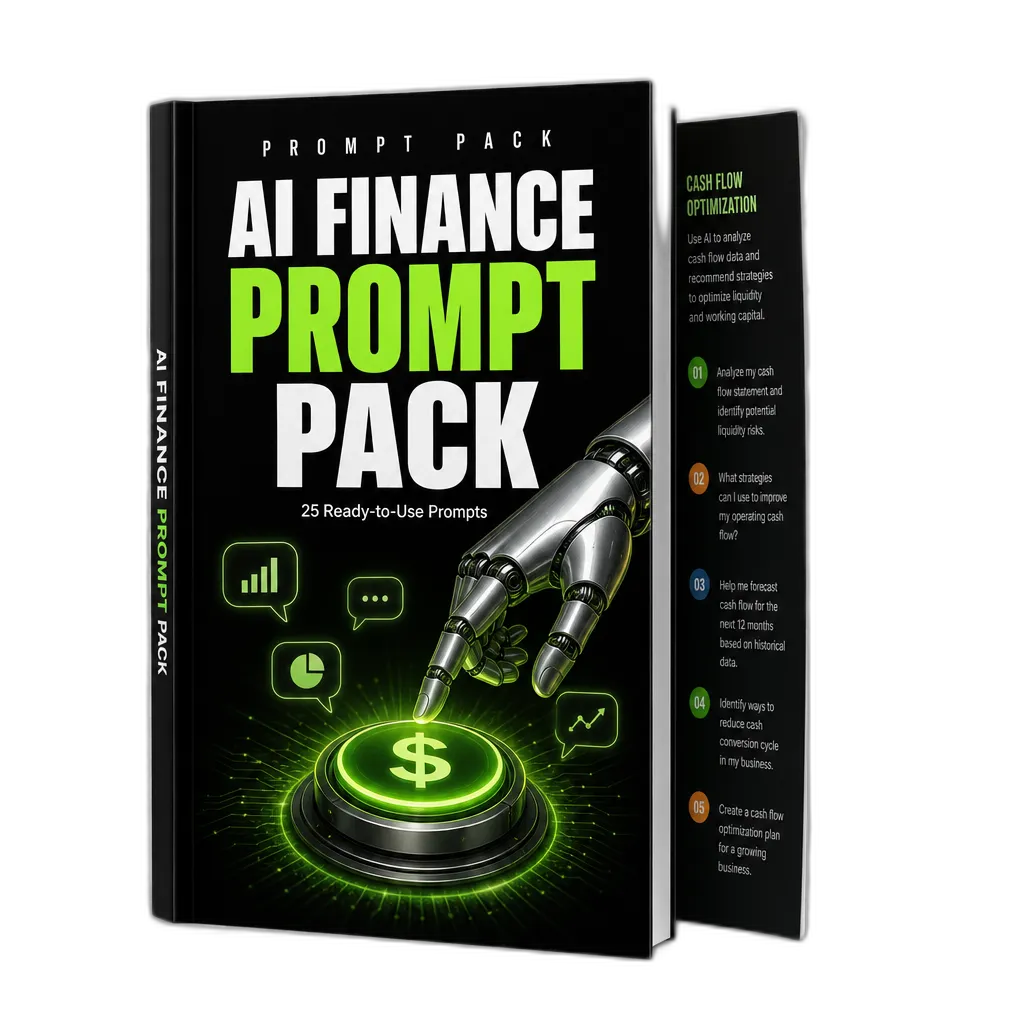
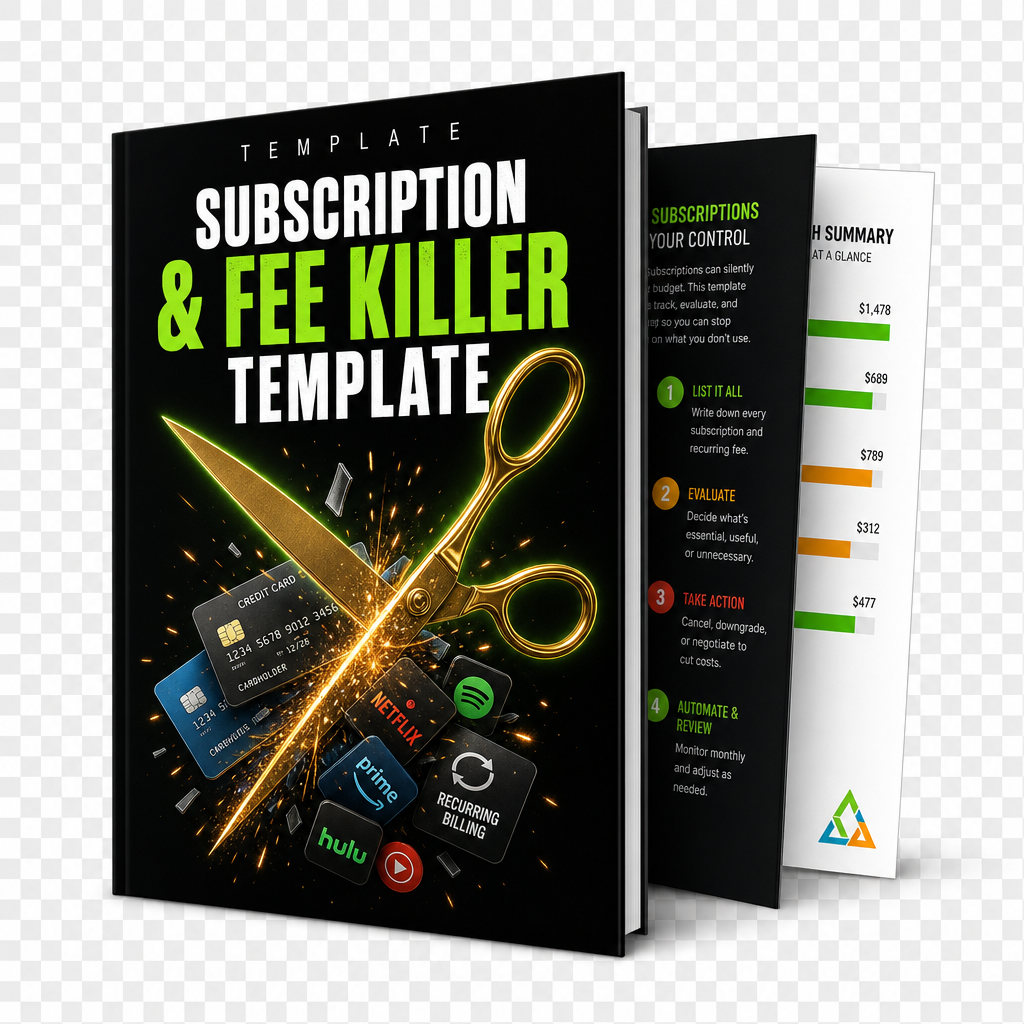
Plus six bonuses (an audit checklist, 25 copy-paste AI prompts, a subscription-killer worksheet, an investing cheat sheet, an income starter guide, and an automation walkthrough) and a copy-and-paste prompt for every single step.
Why Does It Work So Well?
The core idea is simple: most people don't have a discipline problem, they have a visibility problem. You can't fix what you can't see, and most budgeting tools never actually show you the leak — they just chart what already happened.
This system flips that. AI does the scanning, so nothing depends on you remembering to check. Once the leak is visible, the fix (cancel it, redirect it, automate it) takes minutes, not willpower.
Is It Safe and Legitimate?
The guide is explicit that you never share account numbers or passwords with AI tools — only transaction amounts and merchant names, with identifying details stripped out first. It's backed by a 4.7/5 rating across more than 11,000 students, and every order carries a 30-day, no-questions money-back guarantee.
"I did the 30-minute audit on a Sunday morning expecting nothing. Three subscriptions I forgot existed, a gym membership from two moves ago, and bank fees I never knew I was paying. Canceled all of it before lunch." — Jonathan R., Marketing Coordinator
"I followed the income stream guide exactly. Picked one service, set up a profile, sent 5 proposals a day. $340 in my first month, and it has grown every month since." — Carlos T., Warehouse Supervisor
🚨 UPDATE: The AI Personal Finance and Wealth Builder is currently priced at $27 (down from $97) as part of its current promotion.
#2 YNAB (You Need A Budget): Excellent Runner Up

Overall Rating: A
Pros:
Highly detailed, category-based budgeting with a loyal long-term user base
Strong educational content and live workshops for new users
Real-time syncing across accounts and devices
Cons:
100% manual — every transaction has to be categorized and every budget rule built by hand
No AI scanning for hidden leaks; it only shows you what you tell it about
YNAB earned the #2 spot for the sheer depth of its budgeting system. For someone willing to put in daily manual work, it's one of the most thorough tools available.
That's also its limit. It doesn't go looking for anything — if a forgotten subscription isn't manually flagged, YNAB will happily track it indefinitely. It's a serious tool for someone who already wants to do the finding themselves.
#3 Rocket Money: Outstanding Performer

Overall Rating: B
Pros:
Automatically flags recurring subscriptions and price increases
Simple, modern interface that's easy for beginners to navigate
Built-in bill negotiation feature
Cons:
Free tier is limited, and the app frequently prompts upgrades to premium
Cancellation "concierge" service charges a percentage fee of what it saves you
Rocket Money is genuinely useful for spotting recurring charges, and it does some of the same leak-detection work MoneyMind does. Where it falls short is depth — it stops at subscriptions and doesn't extend into a full budgeting, investing, or debt payoff system.
The upsell pressure and percentage-based cancellation fees also mean some of what it "saves" you gets clawed back.
#4 Copilot Money: Reliable Choice

Overall Rating: B
Pros:
Clean, AI-assisted spending insights and categorization
Well-designed budgeting dashboard
Strong data visualization for people who like detail
Cons:
iOS only, no Android version, which locks out a large share of users
Limited guidance once you get past budgeting and want to start investing
Copilot Money is one of the more polished AI-assisted budgeting apps on the market, and its automatic categorization is genuinely good. But the platform restriction is a hard wall for a lot of people, and it doesn't extend into investing, debt payoff, or income-building the way a full system does.
#5 Empower Personal Dashboard: High-End Option

Overall Rating: B-
Pros:
Excellent net worth and investment portfolio tracking
Free retirement planning tools
Strong for users who already have investments to track
Cons:
Day-to-day budgeting is an afterthought compared to its investment tools
Signing up typically triggers repeated calls from their wealth management sales team
Empower is a strong choice if your main goal is tracking an existing portfolio. But it's built for people who already have money invested, not for someone starting from a place of "where did my paycheck go." The sales outreach after signup is also a common complaint among users who just wanted the free dashboard.
Why Our Team Chose The AI Personal Finance and Wealth Builder As The #1 Pick

After testing 9 AI-powered money tools over 30 days, this system stood out for a few clear reasons:
Actually Finds The Leak: Every other tool tracks spending after the fact. This one scans for it directly, and most testers found $100 to $300 a month in the first sitting.
Complete, Not Partial: Budgeting apps stop at budgeting. This covers auditing, budgeting, investing, debt payoff, and automation as one connected system.
Built For Total Beginners: No finance background assumed, no spreadsheets, and a copy-and-paste AI prompt for every single step.
Uses Tools You Already Have: No new software subscription. It runs on the free versions of ChatGPT, Claude, or Gemini.
Runs Itself After Setup: Once the automation module is set up, the system needs roughly 15 minutes a month of oversight.
Real, Verified Proof: A 4.7/5 rating from over 11,000 students, not a launch-week claim.
Low-Risk Entry Point: A one-time $27 payment with a 30-day money-back guarantee removes the downside of trying it.
Transparent On Data Use: The guide is explicit that account numbers and passwords are never shared with AI, only transaction amounts and merchant names.
How long does it take to see results?
Most testers found their first $100 to $300 in leaks within the initial 30-minute audit. The income stream module typically produces a first payment in 2 to 4 weeks. Investing and debt payoff build over time by nature, but progress is visible within the first month.
Is this suitable if I've never invested before?
Yes — the investing module is built specifically for people starting from zero, with a first investment as small as $50 and every option explained in plain language.
Comments:
Marissa Holt
I've tried three budgeting apps and quit all of them within a month. Does this one actually stick?
Derek Owusu
I did the audit this weekend — found $214 a month in stuff I forgot I was paying for. Genuinely didn't expect that.
Todd Pearlman
The fact that it uses ChatGPT instead of another app to log into is honestly what sold me.
Angela Ruiz
Great breakdown, thank you. Been comparing YNAB and this for a week now, this pushed me over.
Brian Costas
Saw this review two weeks ago, got the guide, already have my first $50 auto-investing. Simple.
Priya Malhotra
Appreciate that it's a one-time payment. I'm so tired of $12.99/month apps that do less than this.
Wes Granger
Just bought it. Will report back after I run the audit this weekend.
Camille DuBois
Been using it for about 6 weeks. The automation part is what actually made it stick for me.
Nate Ferris
This matches what I've seen too — Rocket Money is fine for subscriptions but doesn't go any deeper than that.
Julissa Vega
Reading this on my lunch break and immediately downloading the audit checklist. Overdue.
STREAMLINE MONEY REVIEWS
© 2026. All rights reserved.
Streamline Money Reviews is an independent editorial publication. This site may receive compensation from certain brands featured in this article, including the number one ranked product, when you purchase using the links provided. Reviews reflect our editors' subjective testing and assessments and are not guaranteed or endorsed by any external laboratory or standard. This content is for educational purposes only and is not personalized financial advice. Nothing on this page should be construed as a guarantee of investment returns.